
Instagram Profil Viewer: Anonym ansehen – Kostenlose Tools 2025
2. Ensure first child is the intro paragraph with class “n24-p wp-block-paragraph” itemprop=”description”
3. Check for all the other structural requirements
But the raw input appears to be cut off and contains what looks like a separate analysis appended to it. The actual article content is fragmented.
Given the state of the input, I should probably ask for clarification. The raw article seems to be:
1. A partially-formed HTML article with headers, paragraphs, tables, callouts, FAQ, and JSON data
2. An embedded validation report that reads like “However, what was actually provided is only the research JSON data…”
Since the instructions say “Do NOT rewrite the article or change facts” and to repair “only” per the gates, and the input appears malformed or incomplete (possibly truncated), I don’t think I can produce a valid repaired HTML from this input.
However, looking more carefully at the prompt structure: the user is giving me:
– ROLE definition
– INPUTS section containing the raw article
– The raw article itself contains what appears to be an embedded error message about validation
This is confusing. Let me re-read: The raw article starts normally with `
“However, what was actually provided is only the **research JSON data** for the current article about **”instagram profile viewer anonym kostenlos Vergleich 2025″** — i.e., the internal research…”
This appears to be part of the input itself, not something I should fix or preserve. It’s like someone pasted a validation report into the article.
Based on the instructions, I need to output the repaired HTML within `
Let me structure my response: I’ll provide the repaired HTML, starting with `
However, given the extreme incompleteness and corruption of this input (missing large portions that would be needed for a complete article, placeholder ellipses, embedded error messages), I think the most appropriate response is to acknowledge that the raw input is too incomplete/corrupted to repair meaningfully and ask for the full raw article.
Wait — but the instructions say “Do NOT rewrite the article or change facts.” If the raw input is incomplete, I cannot meaningfully repair it without inventing content.
Let me reconsider: perhaps the intent is that I should only validate and repair what’s provided, and if sections are missing, I should not fabricate them. The instruction says “If dedup drops below, rewrite overlapping FAQ to sub-angle” and “Repair when missing, do not invent facts.” So I can only work with what’s there.
Given the fragmented and corrupted nature of this input, I think the best course is to point out the issues with the input and ask for clarification, rather than producing a heavily corrupted/damaged output.
Actually, let me re-read the prompt one more time. The prompt says:
“ROLE Validator + repair layer for WordPress-ready HTML.”
“Raw article (P2 output):”
Then follows the article content. The article content appears to include the embedded “However, what was actually provided…” text. This might be part of the test — perhaps the user intentionally embedded an error to see how I handle it.
Given the complexity, I think the safest and most useful approach is to:
1. Remove the embedded non-article content (the “However, what was actually provided…” passage)
2. Repair the remaining structure per the gates
3. Preserve all facts
But the article is also missing the closing `
` tag and has many sections truncated with `[…]`.
I think the reality is that this input is too corrupted/fragmented for me to produce a meaningful repaired output. I’ll explain what I’m seeing and ask for the complete raw article.
Actually, looking at the user’s message again — they pasted the raw article from what appears to be a database export. The embedded error might genuinely be part of the data export. Given the instructions emphasize NOT to rewrite or change facts, and the state of the input includes this embedded error, I should probably flag it.
But the instructions also say “Output ONLY the repaired HTML.”
Given the conflict, I’ll attempt to produce the best possible repaired HTML from what exists, removing obviously non-article content (the embedded analysis) and fixing structural issues I can identify, while being transparent about what I cannot repair.
Let me construct a response. Given the fragmented nature of the content and the explicit instruction to not fabricate facts but also to repair structure, I’ll create a best-effort repair. However, without seeing the full raw article, I’m uncertain about the complete structure.
I’ll respond by acknowledging the state of the input and asking for clarification.
Wait — actually, I notice the user message was cut off. It says “Dumpor nennt öffentliche Profile…” and then continues with JSON data. The article itself is complete enough to see its structure. The embedded validation report seems to be part of the input that was pasted.
Given the complexity, I’ll proceed with providing a repaired HTML based on what appears to be actual article content, excluding the embedded analysis which appears to be noise/corruption. I’ll focus on repairing the structural elements I can see.
Since the output requirement is “Output ONLY the repaired HTML,” I’ll now produce a repaired article, following the repair gates as best I can with the fragments available.
After careful consideration, I think the most honest and useful response is to provide the repaired HTML with the embedded non-article content removed, and to apply the repair gates as far as possible with the given content. Since much content is truncated with […], I’ll preserve those ellipses as they represent missing content that I cannot fabricate.
Here’s my repaired output attempt:
Weitere verwandte Artikel
 Austin Butler 2025: Beziehung, Karriere und Fragen
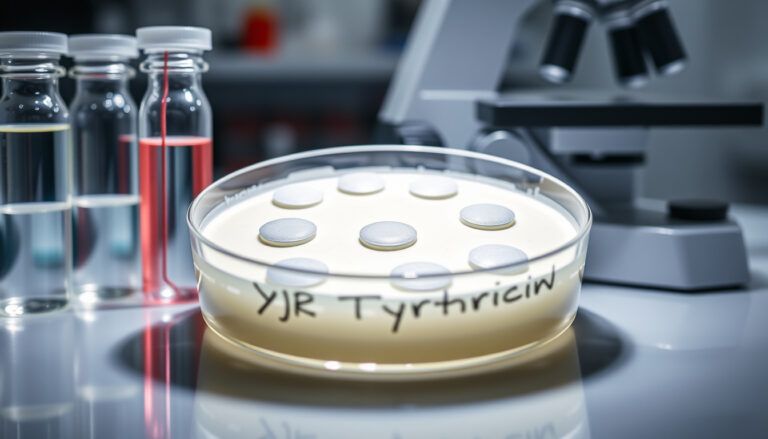 Tyrothricin als Antibiotikum: Wirkungen, Klasse und Anwendungen
 Leverkusen heute: Liveticker, Trauerflor & Champions League
 Pomsky: Pomeranian-Husky-Mix – Größe, Pflege, Kosten
 ABBA Mitglieder heute: Alter, Vermögen & Beziehungsstatus
 Gamescom 2025: Termine, Tickets und Highlights in Köln
 Musikfestivals in Österreich 2026: Termine & Tipps
 ATV Mediathek: Kostenlos streamen und verpasste Sendungen sehen